


Rotator Cuff Surgery Experts in san antonio
What Is the Rotator Cuff?
The rotator cuff is a group of four muscles and tendons that stabilize the shoulder joint and help control arm movement. These tendons connect the shoulder muscles to the upper arm bone, allowing you to lift, rotate, and position your arm.
When one or more of these tendons becomes torn, shoulder pain and weakness often develop.
Rotator cuff tears can range from:
Partial Tears: The tendon is damaged but not completely detached.
Full-Thickness Tears: The tendon is completely separated from the bone.
Massive Tears: Multiple tendons are involved, often causing significant loss of function.
Common Symptoms of a Rotator Cuff Tear
Many patients initially experience mild shoulder discomfort that gradually worsens over time.
Shoulder Pain - Pain is often felt on the outside of the shoulder and upper arm and may worsen with movement.
Weakness - Patients frequently notice difficulty lifting objects, reaching overhead, or performing routine tasks.
Limited Range of Motion - The shoulder may feel stiff, making it difficult to raise or rotate the arm.
Nighttime Pain - Many individuals with a rotator cuff tear experience pain while lying on the affected side, disrupting sleep.
Clicking or Popping - Some patients report sensations of catching, clicking, or grinding within the shoulder joint.
What Causes Rotator Cuff Tears?
Rotator cuff injuries can develop from a variety of causes.
Age-Related Degeneration - As we age, the rotator cuff tendons naturally weaken and become more susceptible to tearing.
Repetitive Overhead Activities - Sports and occupations that involve frequent overhead motions can place significant stress on the tendons.
Traumatic Injuries - Falls, lifting heavy objects, or sudden shoulder injuries can cause an acute rotator cuff tear.
Bone Spurs - Extra bone growth can irritate the rotator cuff tendons, contributing to tendon damage over time.
When Is Rotator Cuff Surgery Necessary?
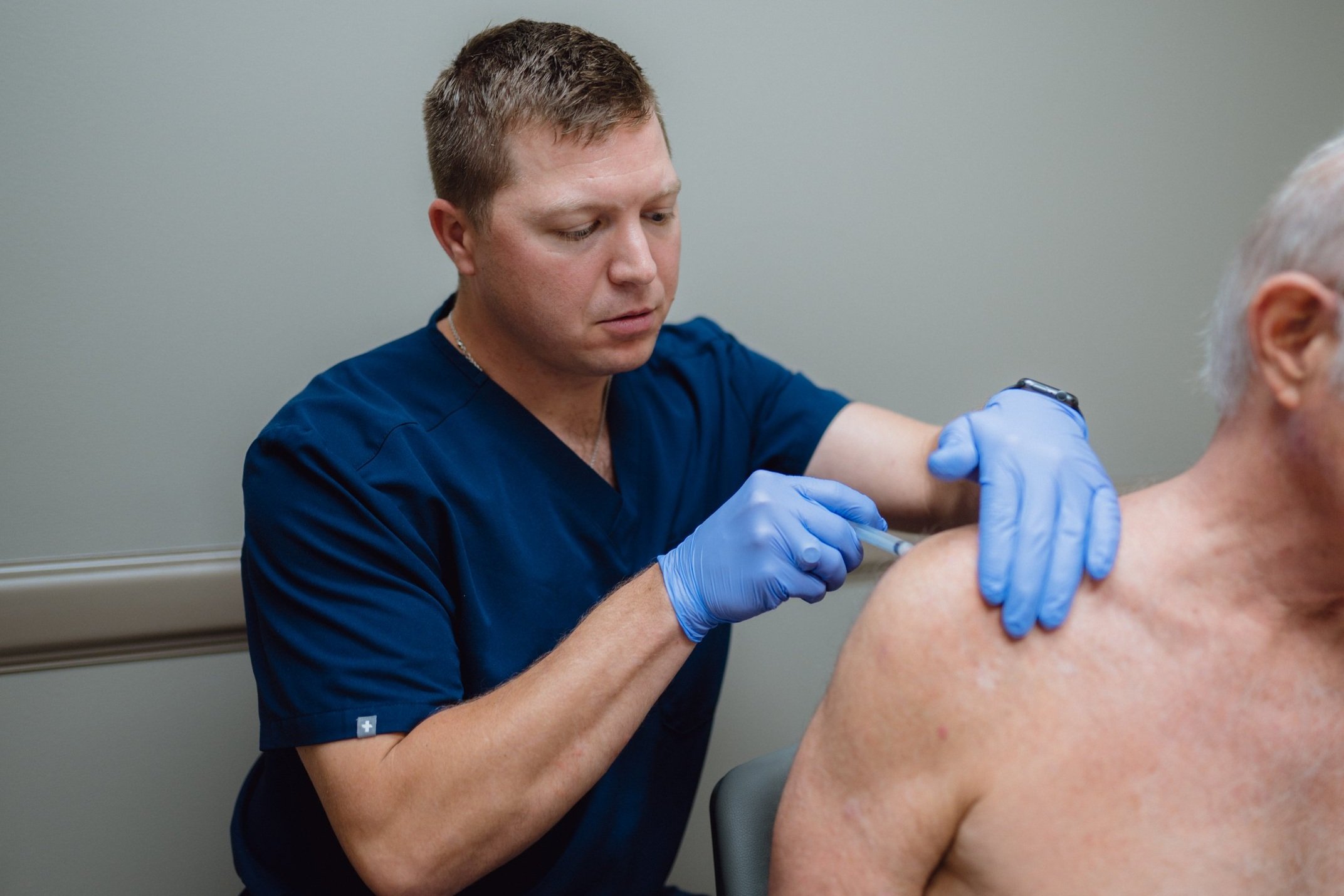
Not every rotator cuff tear requires surgery. Many patients improve with conservative treatments such as physical therapy, medications, injections, and activity modifications.
Surgery may be recommended when:
Symptoms persist despite conservative treatment
The tear is large or severe
Significant weakness is present
Daily activities are limited
The injury resulted from acute trauma
Shoulder function continues to decline
Our shoulder specialists perform comprehensive evaluations to determine whether surgery is the most appropriate treatment option.
How Long Is Rotator Cuff Surgery?
One of the most common questions patients ask is, "How long is rotator cuff surgery?"
The length of surgery depends on the size and complexity of the tear. In most cases, rotator cuff repair takes approximately one to three hours.
Factors that can affect surgical time include:
Size of the tear
Number of tendons involved
Presence of additional shoulder conditions
Whether other procedures are performed at the same time
Most patients return home the same day following surgery.
What Happens During Rotator Cuff Surgery?
Rotator cuff surgery is commonly performed using minimally invasive arthroscopic techniques.
During the procedure, the surgeon:
Creates several small incisions around the shoulder.
Inserts a tiny camera called an arthroscope.
Visualizes the damaged tendon.
Repairs the torn tendon and reattaches it to the bone using specialized anchors.
Addresses any additional shoulder damage if necessary.
Arthroscopic surgery typically results in smaller incisions, less tissue disruption, and faster recovery compared to traditional open surgery.

Meet our SHOULDER Specialist
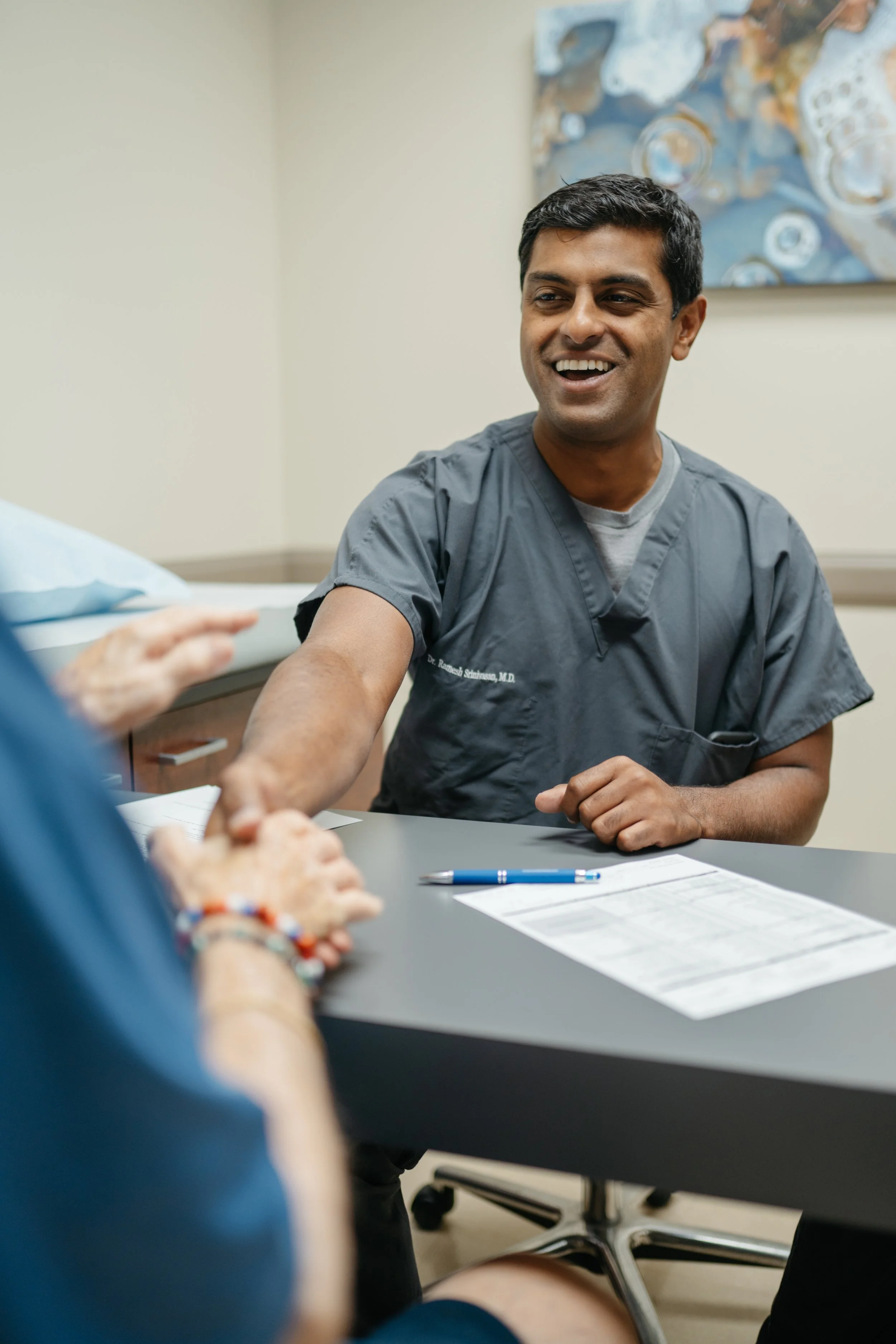
Dr. Srinivasan
Fellowship-Trained, Board Certified Orthopedic Surgeon
Dr. Srinivasan is a specialist in treating shoulder, elbow, and hand injuries. He has a vast knowledge of both arthroscopic and open techniques for ligament, meniscus, cartilage, rotator cuff, and labrum injuries as well as shoulder replacement surgery. He loves treating patients of all ages and abilities, helping them to get back to their favorite activities. He is dedicated to providing the best possible care and getting them back on the path to living their best life.
why come to The Hand and Upper Extremity Center of San Antonio for your Rotator Cuff Surgery?
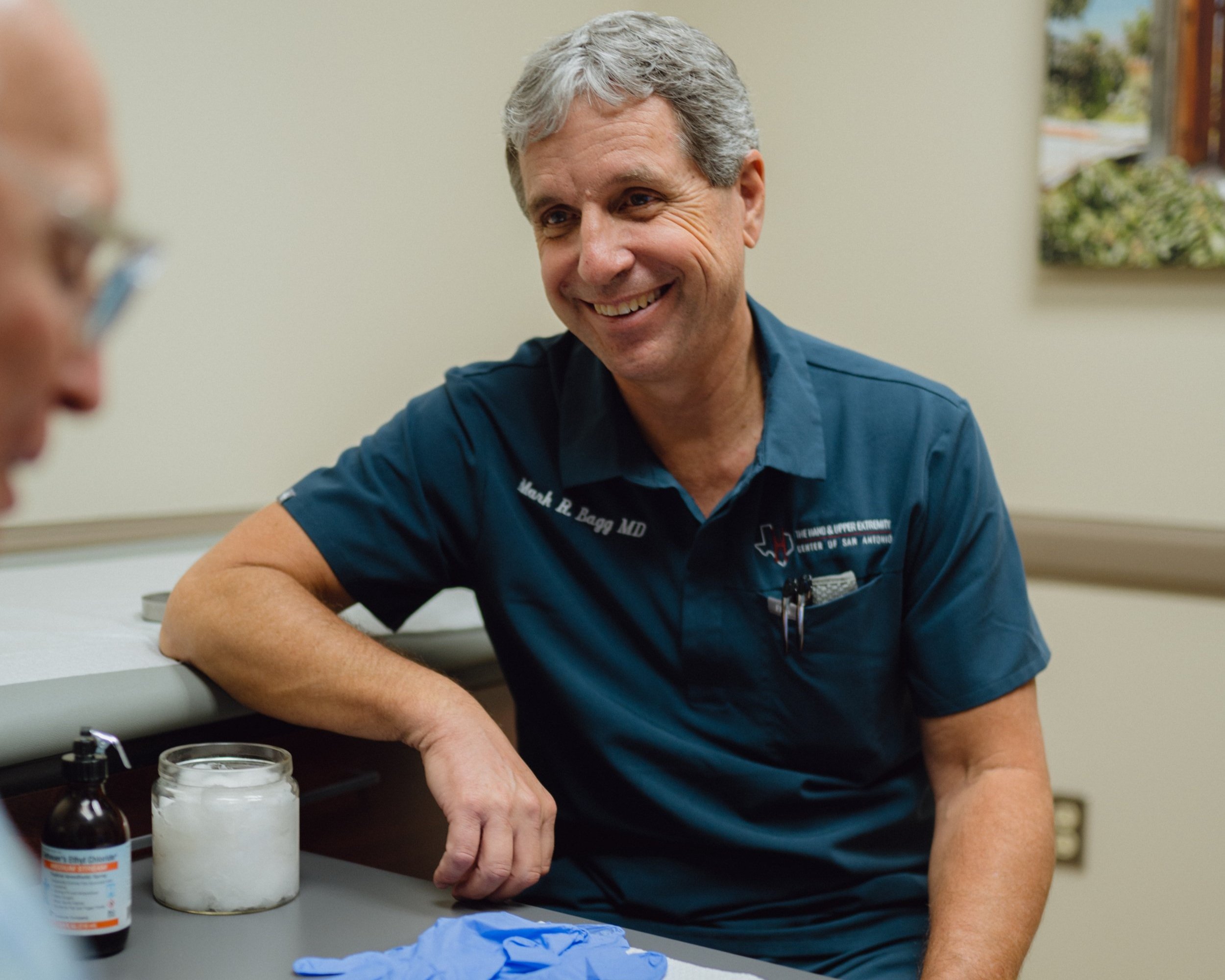
When you visit us at The Hand and Upper Extremity Center of San Antonio, you will find a fine-tuned team ready to take care of you. Your physicians have over 100 years of collective experience and represent multiple generations and training backgrounds. In addition to your surgeons, you may meet one of our hand surgery fellows. Each fellow is a fully trained orthopaedic or plastic surgeon who has completed 5 to 7 years of surgical training after graduation from medical school and has chosen to spend an additional year in training to study hand surgery. In addition to the physicians, you will meet various staff members. From the front desk staff and Medical Assistants (MA’s) to the x-ray and cast technicians, each is committed to taking care of you.
Meet Our Physicians
-
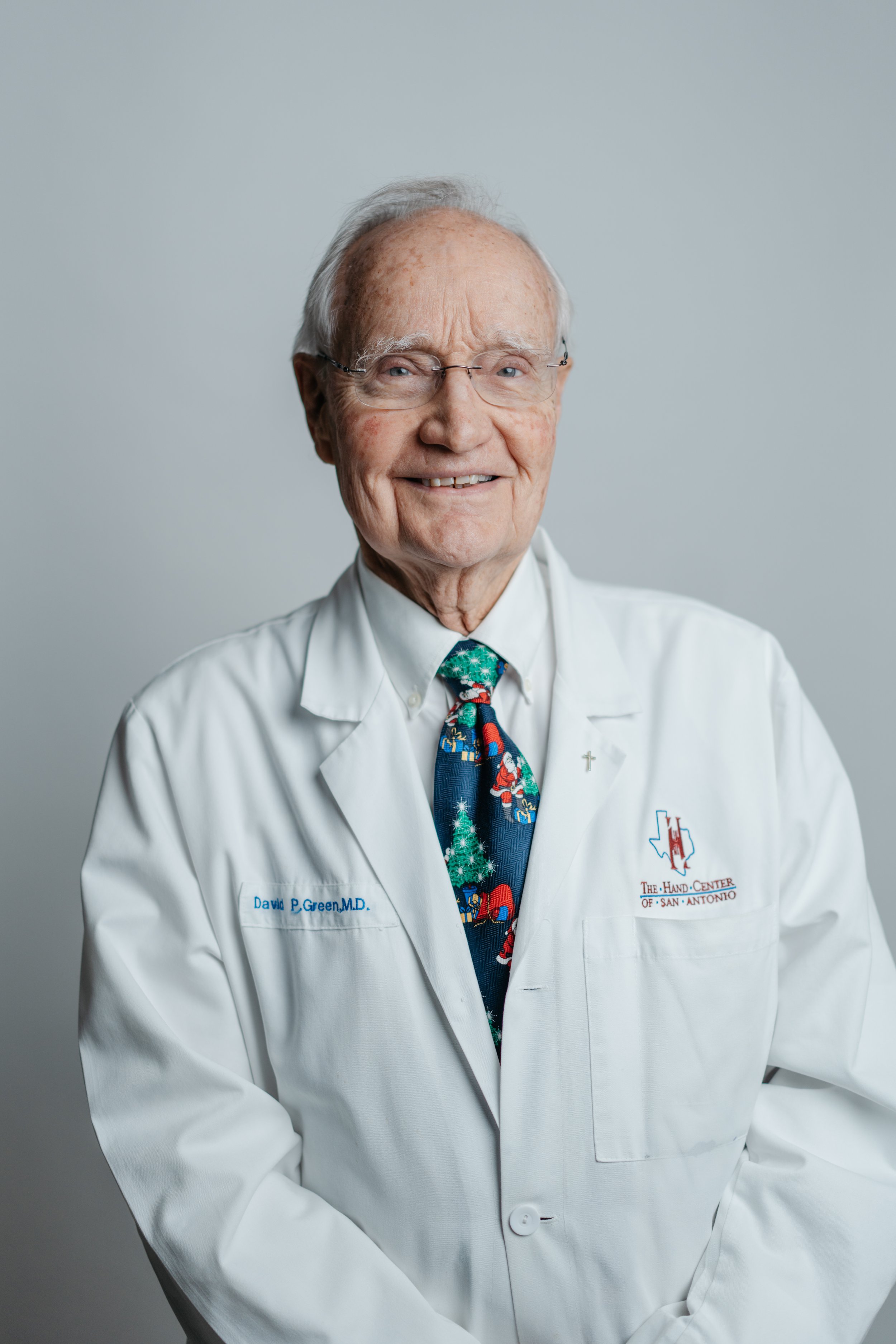
David P. Green, M.D.
-

Mark Bagg, M.D.
-

David W. Person, M.D., F.A.C.S.
-

Ramesh C. Srinivasan, M.D.
OTHER Shoulder RELATED ISSUES WE CAN HELP WITH
Rotator Cuff Surgery
check out our latest blog posts regarding shoulder injuries


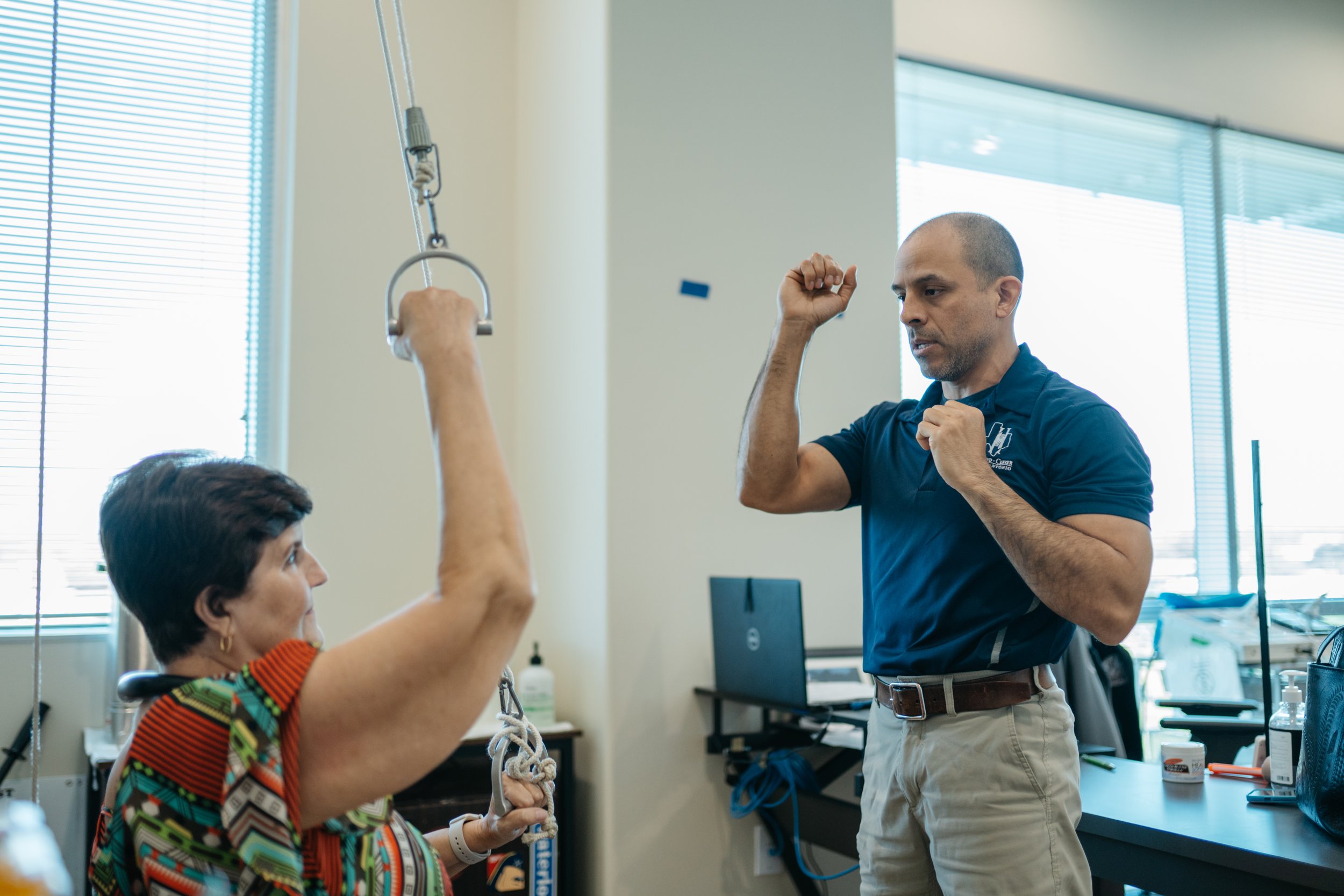
Did you know we offer in-house shoulder therapy?
Shoulder therapy is a merging of occupational and physical therapy theory and practice that combines comprehensive knowledge of the structure of the upper limb with function and activity. Using specialized skills in assessment, planning and treatment, shoulder therapists provide therapeutic interventions to prevent dysfunction, restore function and/or reverse the progression of pathology of the upper limb in order to enhance an individual’s ability to execute tasks and to participate fully in life situations.