
Revision Total Shoulder Replacement in san antonio
Specialized revision shoulder replacement from fellowship-trained shoulder surgeons with over 100 years of collective experience, helping patients with a painful, loose, or failing implant get back to the life they love.
-
100+
Years Collective Experience
-
3
Board-Certified Surgeons
-
2-4 hrs
Typical Surgery Duration
-
Reverse & Anatomic
Revision Options Offered
Understanding your Condition
What Is Total Shoulder Replacement?
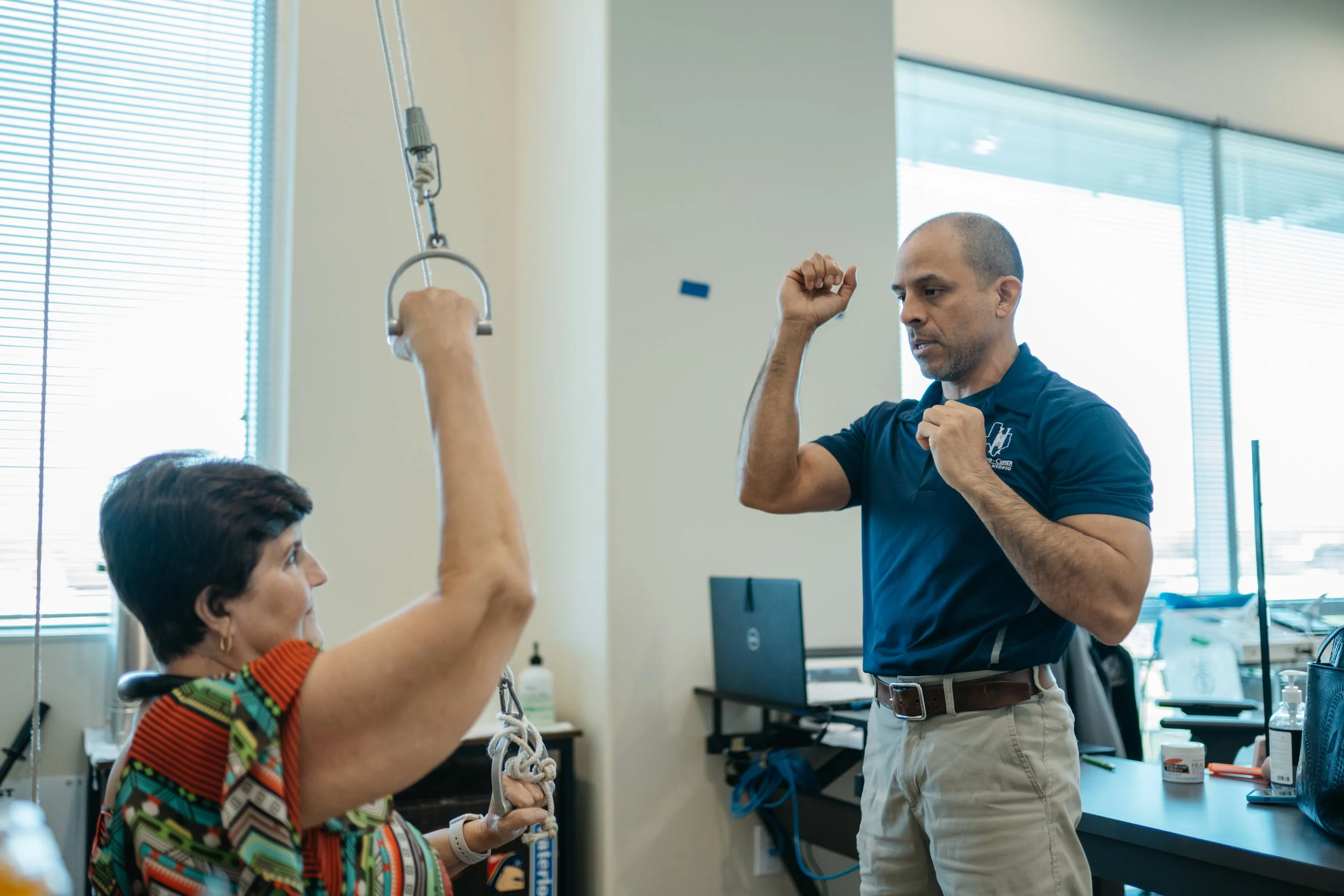
Shoulder replacement, also called total shoulder surgery, replaces the damaged ball and socket of the shoulder joint with artificial components. In an anatomic total shoulder replacement, a metal ball and plastic socket mimic the natural joint. In a reverse total shoulder replacement, the ball and socket positions are switched, which often helps patients with severe rotator cuff damage.
Most patients first receive a shoulder replacement for advanced shoulder arthritis, a fracture, or a massive rotator cuff tear.
Revision total shoulder replacement is a second or later surgery to remove, replace, or adjust part or all of a prior shoulder implant. It is generally more complex than a primary replacement because scar tissue, bone loss, and existing hardware must be carefully managed. In some cases, an anatomic replacement is converted to a reverse total shoulder replacement.
What Is Revision Total Shoulder Replacement?
Signs You May Need a Revision Total Shoulder Replacement
Symptoms of a failing total shoulder replacement can develop gradually or appear suddenly. Many patients first notice that the shoulder no longer feels as good as it did after the original surgery.
Persistent or Worsening Pain - Pain that returns or increases months or years after a shoulder replacement.
Loss of Motion or Strength - Difficulty lifting the arm, reaching overhead, or performing routine tasks.
Instability or Dislocation - A feeling that the shoulder is loose, slipping, or has come out of place.
Clicking, Grinding, or Catching - Sensations that may point to a worn or loose component.
Nighttime Pain - Aching that disrupts sleep, especially when lying on the affected side.
Swelling, Redness, or Warmth - These can signal infection. Fever or drainage near the incision should be evaluated promptly.
Common reasons revision surgery is needed:
Implant loosening
Wear of the implant components over time
Infection
Instability or dislocation
Rotator cuff failure after an anatomic replacement
Fracture around the implant
Problems with the socket (glenoid) component
How Long Is Revision Total Shoulder Replacement Surgery?
One of the most common questions patients ask is, "How long does revision shoulder replacement surgery take?"
Because revision surgery is more complex than a primary replacement, it typically takes longer, often around two to four hours. The exact length depends on what your surgeon finds and needs to address.
Factors that can affect surgical time include:
Whether the original components must be removed
The amount of bone loss and whether bone grafting is needed
Whether infection is involved
Whether the implant is being converted from anatomic to reverse
Whether soft-tissue repairs are needed at the same time.
Many patients stay in the hospital for a night or more after surgery. Your surgeon will review what to expect before your procedure.
What Happens During Revision Total Shoulder Replacement?
One | The shoulder is accessed
The surgeon opens the shoulder through the original surgical area to reach the existing implant and surrounding tissue.
Two | The old implant is removed
Loose, worn, or damaged components are carefully removed, and tissue samples are taken when infection is a concern.
Three | The new implant is placed
New components, often a reverse total shoulder replacement, are secured in place, with bone grafting if bone has been lost.
FOur | Stability and motion are confirmed
The surgeon tests the shoulder through its range of motion, repairs soft tissue as needed, and closes the incisions.

Meet your SHOULDER Specialist
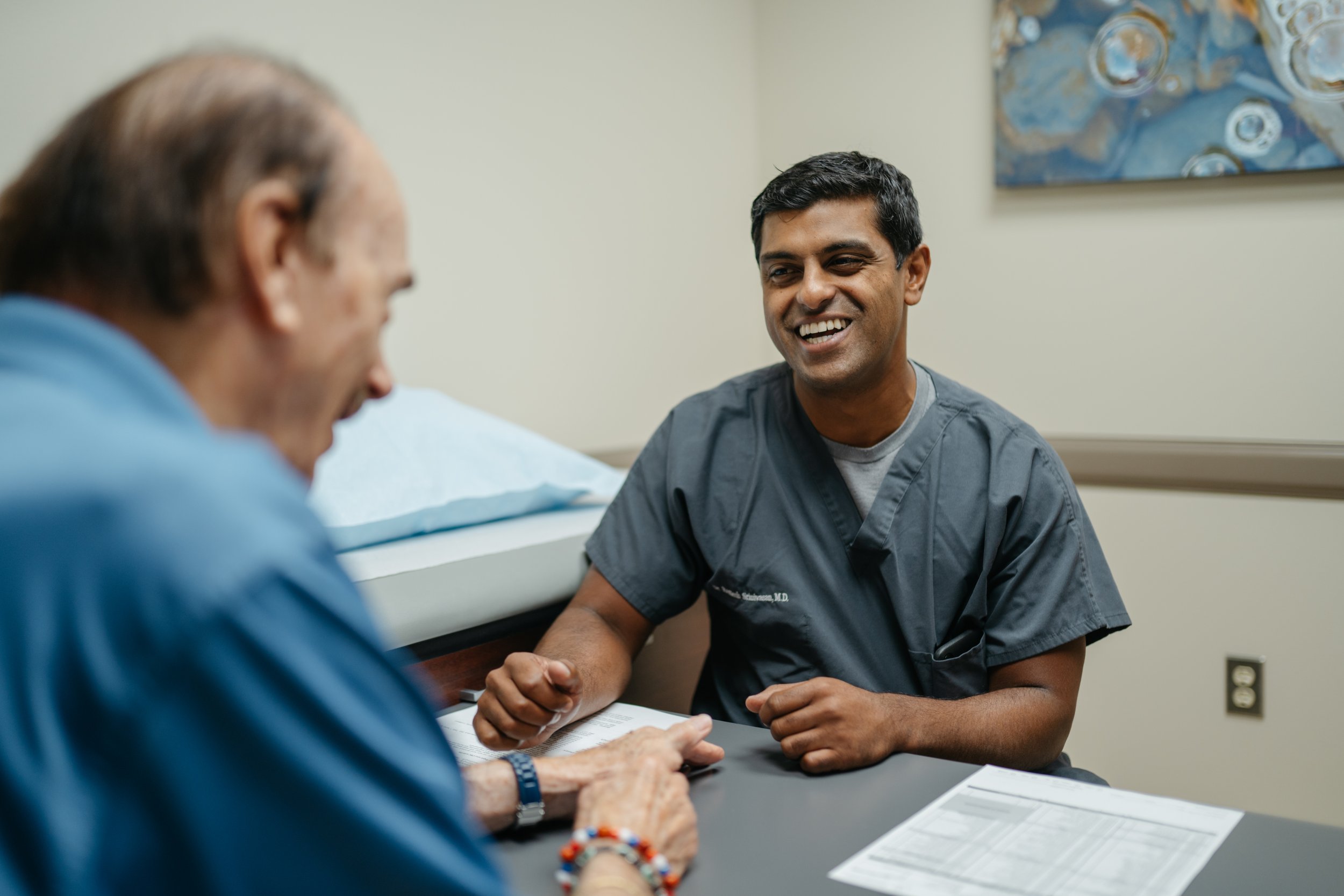
Dr. Ramesh Srinivasan
Fellowship-Trained, Board Certified Orthopedic Surgeon | 2026 Castle Connolly Top Doctor & Top AAPI Doctor
Dr. Srinivasan is a specialist in treating shoulder, elbow, and hand injuries with vast experience in both arthroscopic and open techniques for rotator cuff, labrum, cartilage, and ligament injuries, as well as shoulder replacement. He is dedicated to helping patients of all ages and abilities return to their favorite activities, from daily tasks to competitive sports.
why come to The Hand and Upper Extremity Center of San Antonio for Revision Total Shoulder Replacement?
When you visit us at The Hand and Upper Extremity Center of San Antonio, you will find a fine-tuned team ready to take care of you. Your physicians have over 100 years of collective experience and represent multiple generations and training backgrounds. In addition to your surgeons, you may meet one of our shoulder surgery fellows. Each fellow is a fully trained orthopaedic or plastic surgeon who has completed 5 to 7 years of surgical training after graduation from medical school and has chosen to spend an additional year in training to study shoulder surgery. In addition to the physicians, you will meet various staff members. From the front desk staff and Medical Assistants (MA's) to the x-ray and cast technicians, each is committed to taking care of you.

Don't Wait on a Painful Shoulder Implant.
It's natural to hope a sore shoulder will settle down, especially after you've already been through surgery once. But a loose, worn, or infected implant often does not improve on its own, and waiting can lead to more bone loss and a more complex revision. Our fellowship-trained shoulder specialists can find out what is going on and walk you through your options.
Frequently Asked Questions About Revision Total Shoulder Replacement
-
The Hand & Upper Extremity Center of San Antonio offers shoulder replacement and revision total shoulder replacement with fellowship-trained shoulder surgeon Dr. Ramesh Srinivasan at 21 Spurs Lane, Suite 248 in San Antonio. We accept most major insurance plans and see patients with painful, stiff, or unstable shoulder implants.
-
Revision total shoulder replacement is a second or later surgery that removes, replaces, or adjusts part or all of a previous shoulder implant. It is performed when an implant becomes loose, worn, infected, or unstable, or when other problems like rotator cuff failure or a fracture around the implant affect function.
-
Revision total shoulder replacement surgery often takes around two to four hours, longer than a primary replacement because the surgeon must work around scar tissue, existing hardware, and possible bone loss. The exact time depends on how many components are replaced and whether bone grafting or soft-tissue repair is needed.
-
Recovery from revision total shoulder replacement is typically longer than recovery from a first-time replacement and often takes six months to a year. Most patients wear a sling for about the first six weeks, followed by supervised physical therapy to restore motion and strength. Your surgeon will give you a personalized timeline.
-
Many total shoulder replacements last 10 to 20 years or longer, though this varies with the implant, your activity level, and the quality of your bone and rotator cuff. Implants can loosen or wear out sooner, and revision surgery may be recommended when that happens.
-
An anatomic total shoulder replacement mimics the natural joint with a ball on the arm bone and a socket on the shoulder blade. A reverse total shoulder replacement switches them, which relies on different muscles and often works better when the rotator cuff is severely damaged. Your surgeon recommends one based on your anatomy and the condition of your rotator cuff.
-
Some problems, such as stiffness or tendon irritation, may improve with physical therapy, medication, or injections. Loosening, infection, instability, and fractures around the implant typically require surgery. Dr. Srinivasan performs a thorough evaluation, including imaging and, when needed, lab work, before recommending any treatment.
-
We accept most major insurance plans at our San Antonio office, including Aetna, Blue Cross Blue Shield, Cigna, Humana, Medicare, TriCare, and United Healthcare. Our team will verify your coverage before your procedure so there are no surprises. For out-of-pocket costs, we also offer CareCredit financing. Call us at (210) 558-7025 and we'll help clarify your benefits before your first visit.
-
Yes, we regularly see patients from across the greater San Antonio region, including New Braunfels, Schertz, Converse, Seguin, and Boerne. Our office is conveniently located in the medical district near Loop 410, making us easily accessible from most parts of the metro area.
Meet Our Shoulder Specialists
-

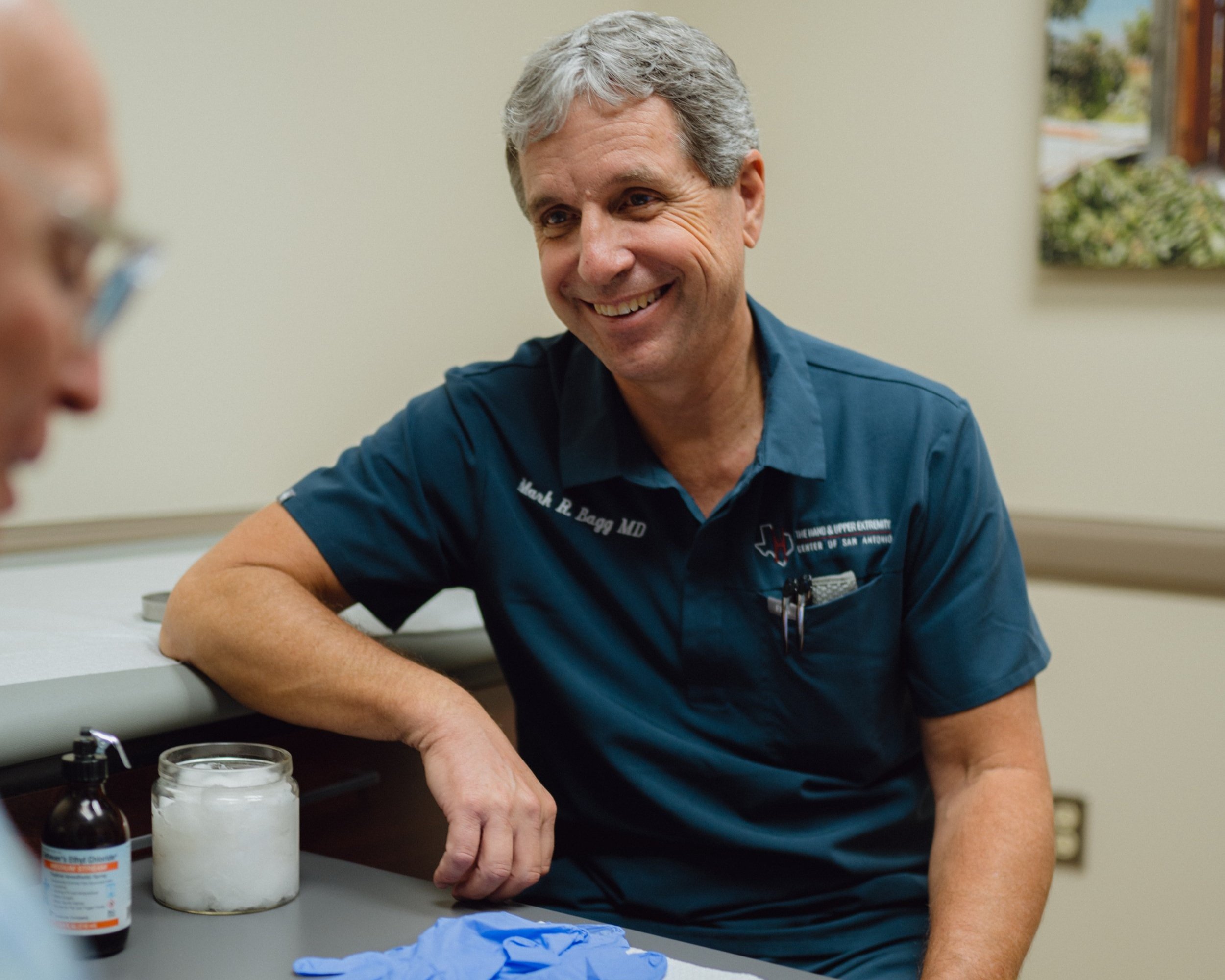
Mark Bagg, M.D.
-

David W. Person, M.D., F.A.C.S.
-

Ramesh C. Srinivasan, M.D.

OTHER Shoulder RELATED ISSUES WE CAN HELP WITH
check out our latest blog posts regarding shoulder injuries